A tape measure for everyday home projects
A tape measure for everyday home projects: how to pick a blade, scale, and lock that fit your hand and your awkward measurements.
Paid link. We may earn a commission if you buy through this link.
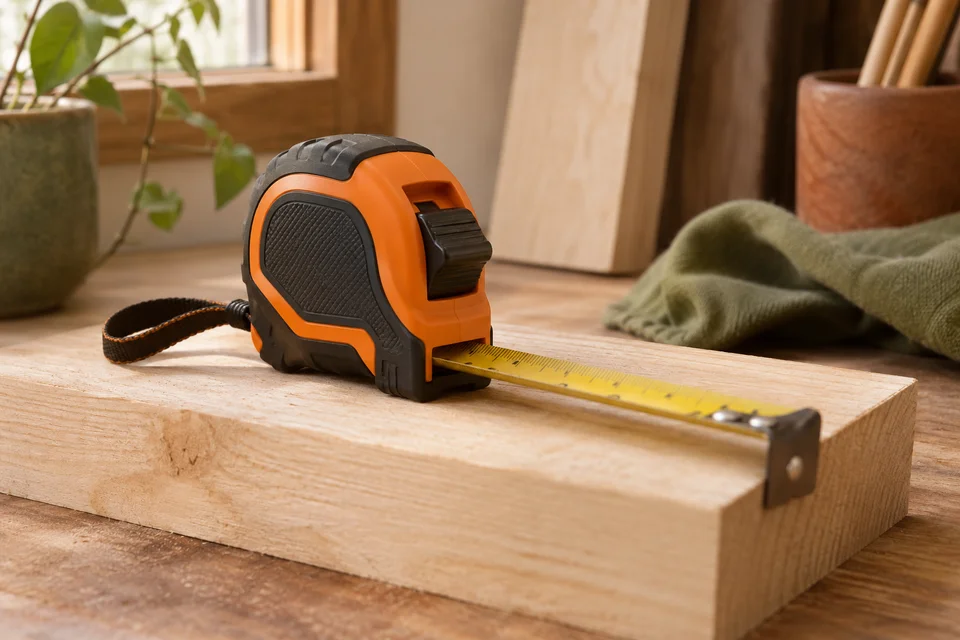
View the Amazon Basics 16 ft tape measure on AmazonThe measurements you take most often can guide this purchase. If the usual job is checking a drawer or marking a picture frame, a compact case can make the tape easier to handle. If you measure wall spans and sheets of material, choose a blade long enough to finish the measurement in one pull.
Choose the scale you will use
Look at the dimensions in the plans, listings, and hardware instructions you work with. If they often mix inches and centimeters, a dual-scale blade will save conversions. Check the listing photographs at full size. On some dual-scale blades the second system is printed on the opposite edge, so confirm you can see the marking while keeping the edge you need against the workpiece.
Fraction markings can be helpful when you’re learning to spot eighths and sixteenths of an inch. The trade-off is extra marks around the number you’re trying to read. For a tape you’ll use in a dim hallway or cupboard, prioritize high contrast, clear full-inch or centimeter marks, and numbers you can read at arm’s length.
Try the case and lock together
A wider blade is worth comparing if you often stretch a tape out unsupported, but a wider tape and its case can feel bulky on short indoor measurements. If you can pick one up in store, draw the blade a short distance and operate the lock with the same hand holding the case. Check that your thumb can reach the control without shifting your grip.
Think about where the case will live. A chunky belt clip matters less if it sits in a kitchen drawer. For a tape you carry around the house, check whether the clip catches on the pocket you normally use and whether the case has a flat side that can rest against a wall.
Check how it takes inside measurements
The hook on many retractable tapes intentionally slides a little to compensate for its own thickness when pushed against a surface or pulled over an edge. A hook that is visibly bent makes it harder to trust either reading. Try measuring the same rigid object from the inside and outside if you suspect a damaged hook.
If you measure shelf openings frequently, look for a case with its length printed clearly. Where the housing is designed for this, you can place it flat against the second wall, take the blade reading at the case edge, and add the case length. For a tight-fit purchase, also measure the opening at the front and back and keep the smaller usable measurement.
What to buy first
For a range of indoor jobs, compare a mid-length tape with easy-to-read markings and a lock you can reach comfortably. If most measurements fit inside a drawer or across a piece of furniture, carry size and legibility matter every time you use it. Buy a long model when your actual jobs need the extra reach.
The other measuring and fastening jobs in a first home toolkit are covered in how to choose your first claw hammer, a screwdriver set for small home repairs, and hex keys for flat-pack furniture.