A screwdriver set for small home repairs
A screwdriver set for small home repairs: which tips, shaft lengths, and handle shapes to buy for the fasteners you actually adjust.
Paid link. We may earn a commission if you buy through this link.
View the SUNHZMCKP screwdriver set on AmazonBefore you buy a screwdriver set, inspect the fasteners on the furniture, cabinet hinges, and hardware you actually adjust. A large set makes sense if those jobs use many tip types. A smaller set is easier to reach for when most of the screws have the same few heads.
Match the tip to the screw
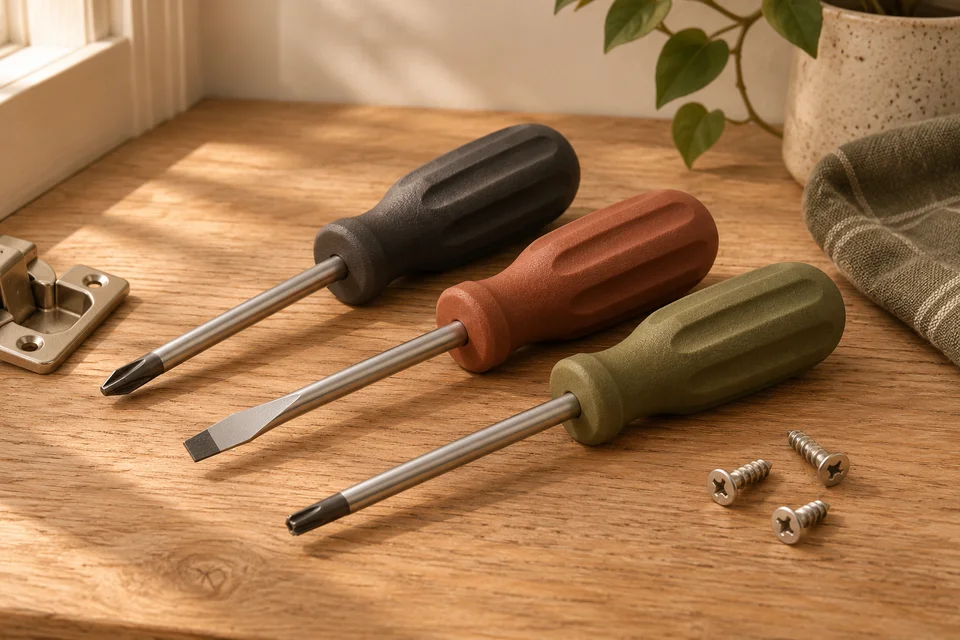
Start with the shape of the recess. Slotted screws take a flat blade that fills the slot without hanging over its edges. Phillips tips fit a cross-shaped recess; a tip that barely grabs the center is usually too small. Drivers for similar-looking cross-head systems can fit differently. If you’re replacing the driver for a specific hinge or fitting, inspect the hardware or check its instructions before guessing.
Use the size markings on the driver or the bit case. When the screw is accessible, seat the tip and gently try to rock it sideways. If it shifts noticeably or climbs out with light pressure, stop and compare the next size or type. That quick check is much easier than dealing with a damaged screw recess.
Decide between fixed drivers and bits
Fixed drivers give you a slim shaft and a predictable handle. They are especially convenient when a screw is down inside an opening. A bit set can pack more profiles into a small case and lets you use the same familiar handle, but the bit holder adds width near the tip. Measure the opening on any item you expect to adjust regularly.
For a cabinet or bookshelf that sits close to a wall, a stubby driver or short bit handle may fit where a full-size handle cannot. A longer shaft helps when a screw is recessed or when a handle must clear a frame. Those two reach problems call for different tools, so check both before buying a set with identical shaft lengths.
Pay attention to the handle and case
Pick a handle you can turn without squeezing hard. A broad handle with flat or rounded faces can feel comfortable for hardware you adjust often. A slimmer rotating-cap driver can be handier for tiny eyeglass or electronics screws. If those are a regular job, buy an appropriate precision set with the tip types the device requires.
For interchangeable bits, check whether each position is labeled and whether the holder keeps the bits in place when you open the case. A small kit is only convenient when you can find the right size without emptying it onto the table.
Build around the first two repairs
Write down the screw type and access space for two repairs you already intend to make. Choose a compact set that handles both. Add a specific driver or bit as new jobs come up; that keeps your toolbox organized around the hardware you actually own.
For the rest of a first home toolkit, see how to choose your first claw hammer, a tape measure for everyday home projects, and hex keys for flat-pack furniture.