Over-door hooks that let the door close
Over-door hooks that let the door close: use door thickness, top clearance, and hook spacing to choose a rack that fits your rental.
Paid link. We may earn a commission if you buy through this link.
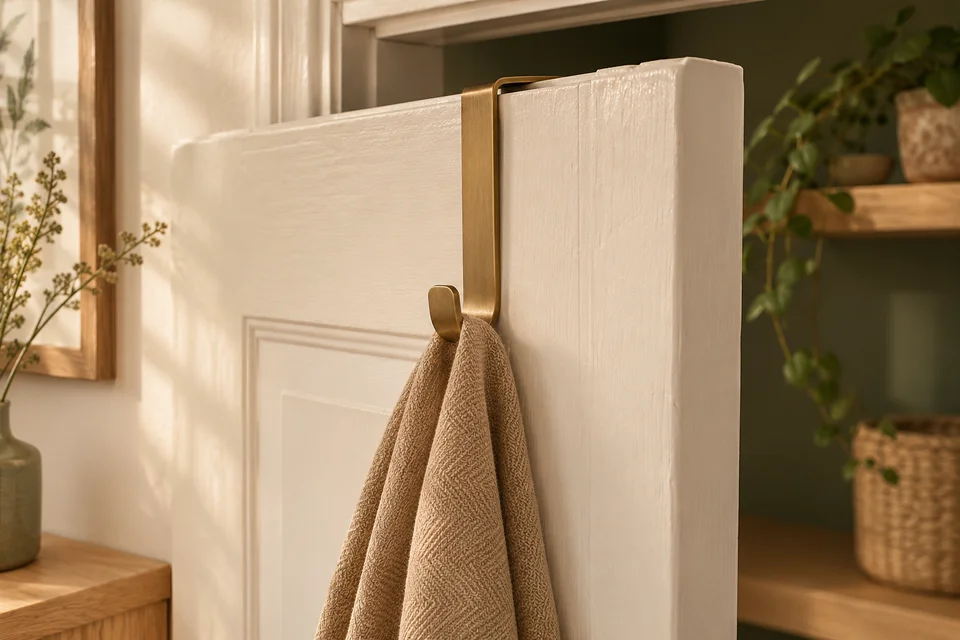
View the BAKON over-door hooks on AmazonAn over-door hook looks simple until the bracket sits too high and you have to push the door shut. Before you order a single hook or a rack, check the gap at the top of the door, the thickness of the door itself, and which side has room for hanging items.
Check thickness and clearance separately
Measure across the edge of the door panel, away from any decorative molding. Compare that number with the bracket’s listed opening. A bracket that fits a range of thicknesses can still move when you take a bag off the hook. Flat pads or spacers supplied with the rack can help, provided they leave enough clearance.
With the door closed normally, check the gap above the top edge near the spot you plan to use. A thin piece of paper can tell you whether the gap varies along the width. For a precise fit, compare the available space with the thickness of the metal or padded part that crosses the top. If the listing doesn’t give that thickness, look for a product with better dimensions or a simple returns policy.
Check the side where items will hang
Open the door through its full swing. Note if the new hook would bump a wall, mirror, or neighboring cabinet. Think about the thickness of the things that will hang there, too. A coat or padded bag can stop the door opening as far as the empty rack allowed.
If you need a towel hook, look at the tip shape and how far it projects. A broad, rounded end is easier on a small fabric loop. For several light items, compare spacing across the usable width. Hooks placed close together look compact in a product photo but may stack folded towels so densely that you grab two at a time.
Choose a rack or individual hooks
Individual hooks are useful when you want to put one item away from another, or when the clearance is better in one part of the door. A rack gives a more consistent row and can reduce the movement you get from one loose bracket. Check how many brackets cross the top and where they land, particularly if the top edge has any obstruction.
Look for the manufacturer’s stated load and what it applies to. A limit for the whole rack and a limit for each hook are different measurements. For daily items, measure the reachable height once the bracket is in place. A hook that fits perfectly but sits above a child’s reach won’t solve the original storage problem.
Test it unloaded
When the hook arrives, try opening, closing, and latching the door with the rack empty. Watch for rubbing at the top and marks on the finish. Hang the intended item only after the bracket sits flat and the door moves freely. A slim bracket is the feature to prioritize when the top clearance is your limiting measurement.
For storage inside the rooms those doors open into, see drawer organizers that actually fit and under-sink storage that fits around the pipes.