Drawer organizers that actually fit
Drawer organizers that actually fit: how to measure around drawer hardware and choose a layout that leaves room for awkward items.
Paid link. We may earn a commission if you buy through this link.
View the RMR bamboo silverware organizer on AmazonEmpty one drawer onto a towel before searching for organizers. Put back anything that belongs somewhere else. In the pile that remains, the longest object, the tallest object, and the things you grab most often should decide what you buy.
Measure the space you can really use
Measure the inside width and depth at the floor of the drawer. If the sides taper, measure the opening and the floor separately. Note any screw heads, front panels, or curved corners where a hard tray might catch. On older drawers that don’t pull all the way out, take a second depth measurement for the area you can comfortably reach with your hand.
Then check the height where the drawer slides under the cabinet. An organizer can sit comfortably inside the drawer and still jam if a ladle handle sticks up. Test the tallest item where it will be stored and close the drawer slowly. Leave clearance above that item rather than matching the stated height exactly.
Choose a layout around your awkward item
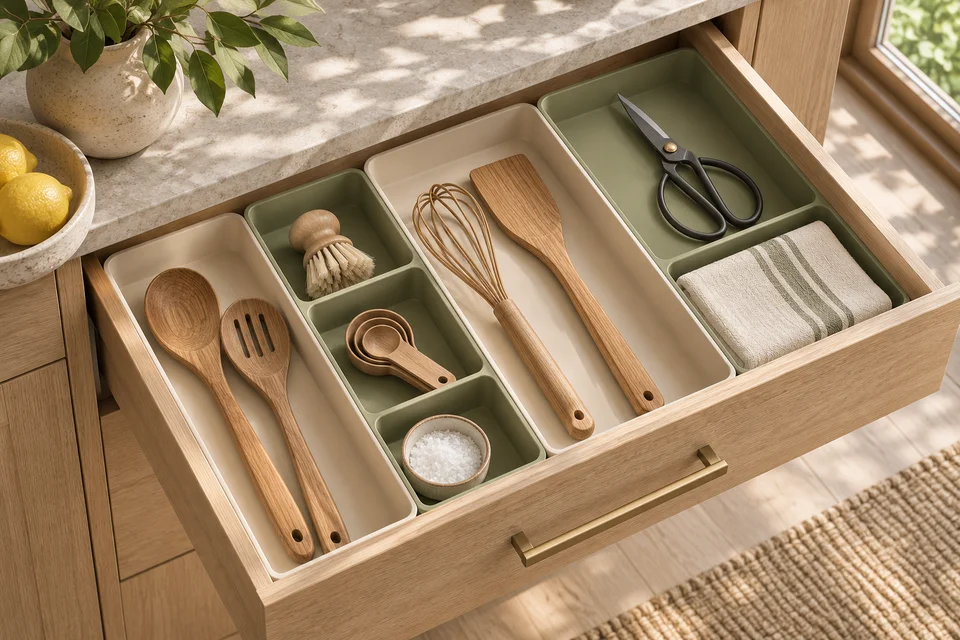
Use a long compartment for things such as tongs, a rolling pin, or a ruler. Then fit smaller compartments around it. If you’ll be mixing utensils, leave room at the ends so that you can pinch a handle and lift it out. A tray that gets every item into the drawer can still be irritating to use if pieces overlap at the points where you grab them.
A one-piece tray is easy to lift out and clean if it fits the drawer and matches your daily routine. Modular bins give you more freedom in a wide or unusually shaped drawer. Adjustable dividers are useful if you need a full-length lane, especially when fixed trays waste space. Check that spring-loaded dividers cover your actual drawer depth and that the pads have flat surfaces to rest against.
Make a paper template before ordering
Cut strips of scrap paper to match the organizer’s outside dimensions. Place them in the drawer in the arrangement shown in the product listing. Check empty space at the sides. Moving one small bin from the back row to the front often makes room for something long without requiring a second purchase.
Check inside compartment measurements separately. Rounded walls and thick rims can turn an advertised six-inch bin into a much shorter usable space. If the listing doesn’t show interior measurements and you need a tight fit, choose an option with a return policy you can use.
Keep the front easy to reach
Place the tools you use every day within the first comfortable reach of your hand. Store occasional items at the back. If bins shift when the drawer closes, try a thin non-slip liner and recheck the height. A stable organizer you can clean in one pass will serve you better than a layout with extra slots you rarely use.
The same measure-first approach applies to under-sink storage that fits around the pipes and over-door hooks that let the door close.