Choosing a lamp for a small desk
Choosing a lamp for a small desk: find the right mount, arm reach, dimming, and controls for the work you do at your desk.
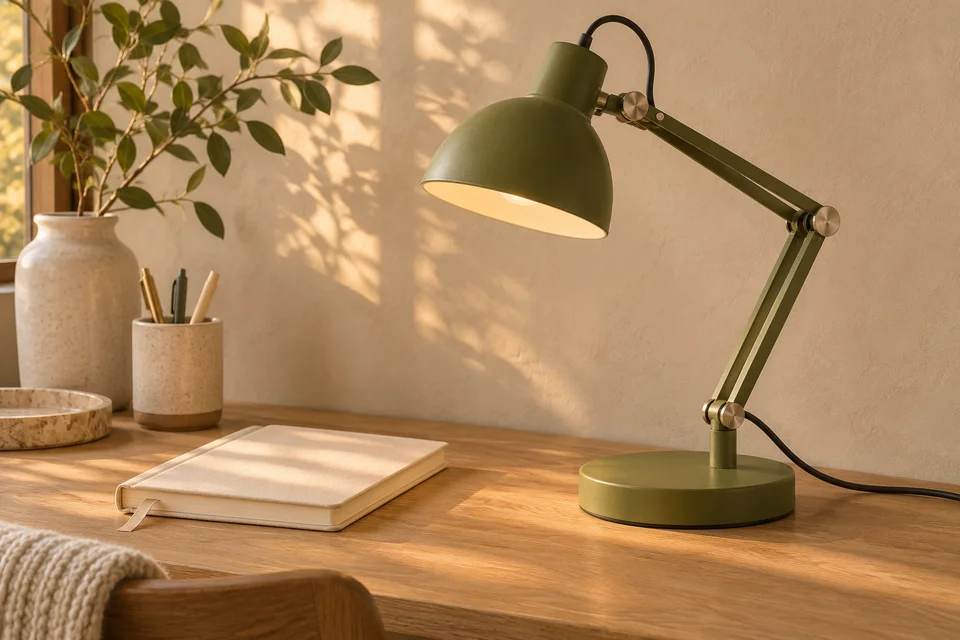
Paid link. We may earn a commission if you buy through this link.
View the Vicsoon adjustable desk lamp on AmazonSet your notebook or keyboard in its usual spot and sit down. The lamp needs to illuminate the spot where you’re working, so measure from that spot to the places you can actually mount or stand a lamp. A compact product photo won’t tell you whether the lamp reaches past your monitor or whether its base fits beside the keyboard.
Choose a base or clamp that fits
A freestanding base works well when you move the lamp between surfaces or can’t grip the edge of a desk. Compare the diameter of the base with the usable desk space, including the cord exit. A base that fits with the desk empty might still collide with the notebook you open every morning.
A clamp keeps the main work surface free if the desk has an accessible edge. Check the supported thickness, the depth of the jaws, and what sits underneath the desktop. A metal crossbar or drawer can block the lower jaw even when the material is thin enough. If you rent or share the desk, look for padded jaws and confirm you can remove the clamp without leaving marks.
Check the angle from your chair
A swiveling head can direct light onto a notebook without aiming it into your eyes. If you write by hand, try placing the light on the opposite side from your writing hand to reduce the shadow across the page. For a desk shared by left- and right-handed users, compare how far the lamp can travel or how easily the base can move.
If you work around a screen, angle the light toward paper or the keyboard and look for reflections from your usual seat. A narrow directional beam is useful for a small task. A broader diffuser can be more comfortable when you spread papers across the desk and need the light to cover a larger area.
Check controls, power, and bulb type
Decide where you want the switch. Controls on the cable can fall behind a desk. Controls on the base may be easier to reach, provided the base sits near your hand. If you use the lamp in the evening, verify that it dims to a softer setting instead of relying on a color-temperature switch alone.
A lamp with a replaceable bulb lets you change the bulb later, subject to the fixture’s size and rating. Integrated LEDs can allow a smaller head. Check whether the manufacturer provides replacement parts if longevity matters to you. For USB-powered lamps, check whether the adapter is included and what power input the listing specifies.
Check the footprint one last time
Put a piece of paper where the base or clamp will go. Mark the point where you need the light to fall. Compare that distance with the arm’s stated reach before checking out. This takes a minute and catches the mismatch that matters most on a small desk.
If the lamp shares the desk with a laptop, see a laptop stand for a small desk and an under-desk cable tray you can still reach for the rest of the setup.